
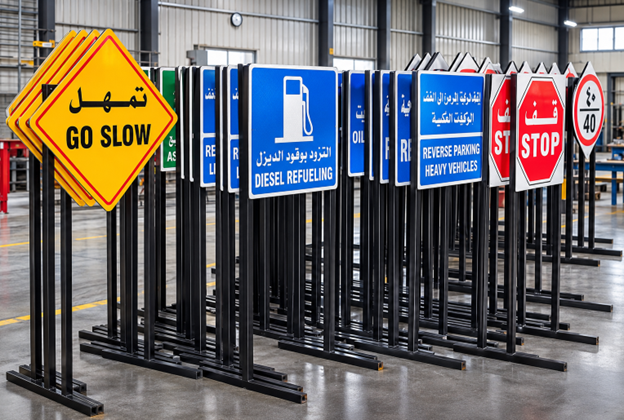
Road signage plays a critical role in maintaining traffic safety, particularly on highways, busy urban roads, and developing infrastructure networks. However, issues like fading, poor visibility, and environmental impacts can affect the efficiency of road signs. When evaluating road sign board manufacturers, project managers and infrastructure developers need to consider more than initial costs, focusing on visibility, material performance, and long-term durability. At Zarmadad Signs, road signage requirements are approached with attention to practical installation needs and the conditions in which signs must perform.
In Oman, road signs should remain legible under a variety of environmental conditions, including bright sunlight, dust, and changing visibility. Addressing these factors during the selection and installation stages can help reduce recurring maintenance requirements and support safer road conditions.
Why Do Road Signs Lose Their Effectiveness?
The initial setup of a sign may not pose any problems at the time but may lead to complications later on. The major step to solving the issue is identifying what caused the complication in the first place.
Common problems include:
- Fading and discoloration: Over time, a sign can be exposed to direct sunlight, which may change its appearance and affect the lettering and symbols on the surface of the sign.
- Poor nighttime visibility: Signs with unsuitable reflective materials may not return enough light towards approaching drivers, particularly on poorly lit roads.
- Surface damage: Dust and sand contamination, as well as moisture and dirt buildup, can both affect the readability of the sign.
- Structural deterioration: A weak support and loose fastenings can influence the stability of a sign and lead to further problems with maintenance.
- Outdated information: Changes to road layouts, speed limits, and traffic movement can make existing signs confusing or inaccurate.
These problems require different solutions. Replacing a damaged sign face will not resolve an unstable support, just as cleaning a sign will not restore worn reflective material. Inspections should identify the underlying issue before replacement or repair work begins.
Choosing Materials That Suit Oman's Conditions
Selection of the materials plays a significant role in determining the longevity of any sign. A road sign intended for a shaded urban street may have different requirements from one installed along an exposed highway or near an active construction site.
When comparing road signage options, consider the following factors:
- Weather resistance: Select materials that will withstand the environmental conditions of that particular area where the sign will be situated.
- Reflective performance: Check whether the reflective sheeting suits the road's lighting conditions, traffic speed, and visibility requirements.
- Structural strength: Ensure that all components of the sign are suitable with respect to the factors of this area.
- Legibility: Apply the right letters, characters, colors, and contrast so that drivers do not have any problems understanding any messages.
- Maintenance requirements: Consider how easily the sign can be inspected, cleaned, and replaced if damaged.
For organizations sourcing reflective signs in Oman, the important consideration is consistent visibility throughout the sign's intended service life, rather than appearance or initial purchase price alone. Material specifications should be assessed against the project's requirements and applicable road safety standards.
Reflective or Solar-Powered Signs: Which Is More Suitable?
Reflective and solar-powered signs meet various visibility needs. Familiarizing oneself with their operation can help project teams select the right system to use.
Reflective road signs employ a special sheeting material that reflects light from a vehicle’s headlights towards the driver. They can be useful on roads where street lighting is limited, provided the reflective material is appropriate and maintained in good condition.
Solar-powered road signs get their energy from the sun to illuminate warning signs or lights, depending on the design of the system. These can be very helpful in remote areas, temporary work sites, and other areas where it may be impossible to connect to electricity.
Before selecting a system, evaluate:
- The amount of natural and artificial light available at the location.
- Traffic volume and speed, as well as the time during which visibility is crucial.
- The amount of sunlight available and potential shading for solar panels.
- Battery capacity, energy requirements, and accessibility for servicing.
- Installation costs, maintenance costs, and projected lifespan of the system.
For suitable projects, solar road signs in Oman can offer an additional visibility solution where conventional reflective signage alone may not provide the required level of warning. However, the choice should depend on site conditions, technical specifications, and applicable safety requirements.
What Should You Check Before Ordering Replacement Signs?
Installing new road signs without properly analyzing the initial problem can result in additional expenses. A systematic analysis ensures that the newly made sign actually fulfills a need.
Before placing an order, confirm these five details:
- Location and purpose: Find out whether the sign is installed for a highway, residential area, place of parking, construction site, or private route.
- Sign type: Find out if you need a regulatory, warning, direction, speed limit, or individually designed safety sign.
- Dimensions and design: Check the size, symbols, and wording of the sign, as well as color and visibility distance.
- Installation requirements: Determine how the sign is going to be installed, what structure is required, and what regulations are necessary.
- Applicable standards: Confirm the relevant authority's specifications for sign design, placement, reflectivity, and installation.
Providing accurate information at the quotation stage helps prevent design revisions, incorrect dimensions, and avoidable installation delays.
Working With a Reliable Traffic Sign Supplier
Price is an important consideration in making a purchase, but it is not the only thing to look for in choosing suppliers. Differences in materials, fabrication quality, customization capabilities, and technical support can affect the overall value of a project.
When comparing road traffic signs suppliers, ask for clear information about material specifications, reflective properties, available sign categories, and quality checks. Confirm whether the supplier can accommodate project-specific dimensions and designs, and clarify production and delivery schedules before finalizing an order.
We should also talk about the need for replacing signs. If your project includes many signs, using standardized requirements can make maintenance easy in the future as well as reduce any confusion when replacing individual signs.
Zarmadad Signs provides road sign solutions for all project needs, thus making sure all types of road signs can be covered, such as regulatory signs, warning signs, directional signs, and custom signs. Discussing the installation environment and intended use helps establish which specifications are appropriate for each application.
A Practical Approach to Road Sign Maintenance
Regular inspection is important, even for well-made signs. A straightforward maintenance plan can help spot issues before they impact drivers.
Project team members should look for signs of fading, dirt, broken reflectors, loose components, rust, and blocked lines of sight when assessing the signs. Nighttime inspections can reveal visibility issues that may not be apparent during daylight.
Inspection frequency should reflect the road environment, traffic conditions, and relevant maintenance requirements. Signs near construction activities or exposed locations may need additional attention.
Records of inspection dates, identified defects, and completed repairs also help maintenance teams prioritize work and recognize recurring problems. Where a sign is damaged, missing, or difficult to read, arrange corrective action promptly in accordance with the applicable safety procedures.
Make Your Next Signage Decision Count
Road signage performs best when material selection, visibility, installation, and maintenance are considered together. Addressing these factors at the planning stage helps reduce avoidable replacements, maintain clear communication with drivers, and support safer road environments.
Whether you are upgrading existing signage or planning a new infrastructure project, Zarmadad Signs encourages project teams to look beyond the initial purchase and consider the long-term performance of their signage. Start with your project's visibility challenges, assess the right material and design requirements, and make your next road signage investment a more informed one.


